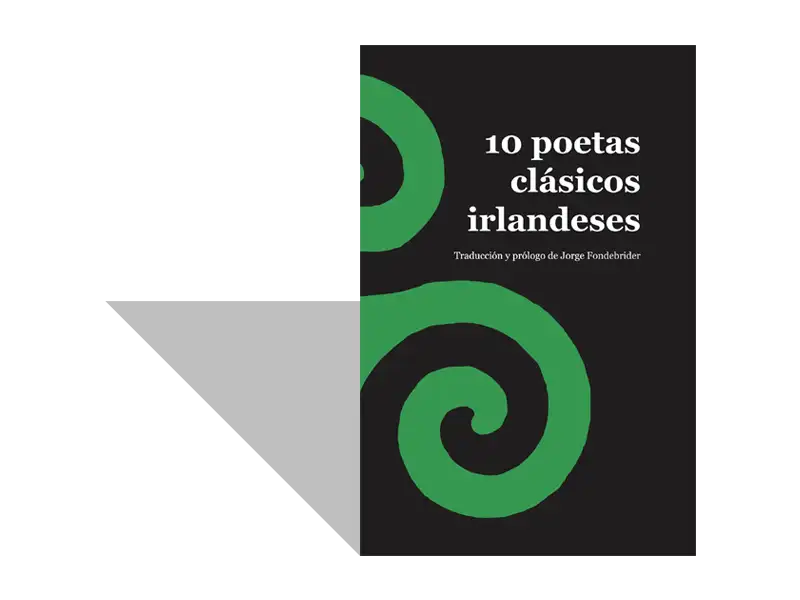
“La historia de la poesía irlandesa contemporánea —apunta Jorge Fondebrider— puede leerse como la historia del esfuerzo continuo y vehemente por diferenciarse de Yeats”. A partir de esa lectura, Fondebrider ofrece una selección de poetas del siglo XX irlandeses que van desde la renovación y la resistencia a cualquier ortodoxia de Patrick Kavanagh hasta el Nobel Seamus Heaney. La antología, traducida y prologada por Fondebrider, incluye un perfil bio-bibliográfico de cada poeta. La obra llega de la mano de Ediciones del Lirio y se presenta hoy a las 17hrs. en la FIL de Guadalajara.
• Patrick Kavanagh (1904-1967)
Inniskeen Road, July Evening
The bicycles go by in twos and threes –
There’s a dance in Billy Brennan’s barn tonight,
And there’s the half-talk code of mysteries
And the wink-and-elbow language of delight.
Half-past eight and there is not a spot
Upon a mile of road, no shadow thrown
That might turn out a man or woman, not
A footfall tapping secrecies of stone.
I have what every poet hates in spite
Of all the solemn talk of contemplation.
Oh, Alexander Selkirk knew the plight
Of being king and government and nation.
A road, a mile of kingdom, I am king
Of banks and stones and every blooming thing.
Inniskeen Road: atardecer de julio
Las bicicletas pasan de a dos y de a tres;
En el granero de Billy Brennan esta noche hay un baile,
y está el código de misterios a medias
y el alegre lenguaje de empinar el codo.
Ocho y media y no hay un solo lugar
en una milla de camino, ninguna sombra reflejada
de hombre o de mujer, ninguna
pisada que altere el silencio de la piedra.
Tengo lo que todo poeta aborrece, más allá
de cualquier discurso grave sobre la contemplación.
Oh, Alexander Selkirk conoció el problema
de ser rey, gobierno y nación.
Un camino, una milla de reino; yo soy rey
de laderas y piedras y de toda cosa que florezca.
Wet Evening in April
The birds sang in the wet trees
And as I listened to them it was a hundred years from now
And I was dead and someone else was listening to them.
But I was glad I had recorded for him the melancholy.
Atardecer húmedo de abril
Los pájaros cantaron en los árboles mojados
y cuando los escuché, pasados los cien años
y yo estaba muerto y alguien más los estaba escuchando.
Pero me alegré de haber registrado para él la melancolía.
* * *
• John Montague (1929-2016)
No music
I’ll tell you a sore truth, little understood.
It’s harder to leave, than to be left:
To stay, to leave, both sting wrong.
You will always have me to blame,
Can dream we might have sailed on;
From absence’s rib, a warm fiction.
But I must recognise what I have done
And, if it fails, accept the burden
Of the harm done to you & another one.
To tear up old love by the roots,
To trample on past affections:
There is no music for so harsh a song.
Sin música
Voy a decirte una verdad dolorosa, poco entendida.
es más difícil irse que ser dejado:
quedarse, irse, ambas cosas duelen.
Siempre me tendrás para culparme,
puedo soñar que podríamos haber navegado;
de la costilla de la ausencia, una cálida ficción.
Pero debo reconocer lo que he hecho
y, si no funciona, aceptar la carga
del daño hecho a ti y a otro.
Arrancar de raíz el viejo amor
pisotear afectos pasados:
no hay música para una canción tan dura.
* * *
• Seamus Heaney (1939-2013)
From the Frontier of Writing
The tightness and the nilness round that space
when the car stops in the road, the troops inspect
its make and number and, as one bends his face
towards your window, you catch sight of more
on a hill beyond, eyeing with intent
down cradled guns that hold you under cover,
and everything is pure interrogation
until a rifle motions and you move
with guarded unconcerned acceleration –
a little emptier, a little spent
as always by that quiver in the self,
subjugated, yes, and obedient.
So you drive on to the frontier of writing
where it happens again. The guns on tripods;
the sergeant with his on-off mike repeating
data about you, waiting for the squawk
of clearance; the marksman training down
out of the sun upon you like a hawk.
And suddenly you’re through, arraigned yet freed,
as if you’d passed from behind a waterfall
on the black current of a tarmac road
past armour-plated vehicles, out between
the posted soldiers flowing and receding
like tree shadows into the polished windscreen.
Desde la frontera de la escritura
La tensión y la nada ciñen aquel espacio
cuando el coche para en el camino, las tropas revisan
modelo y chapa y, mientras uno de ellos asoma la cabeza
por tu ventanilla, te das cuenta de que hay más
en una colina distante, apuntando fijo con fusiles amartillados
que te mantienen bajo control,
y todo es pura interrogación
hasta que alguien mueve el rifle y uno acelera
con fingida despreocupación
un poco más vacío, un poco gastado,
como siempre, por ese estremecimiento del yo,
sojuzgado, sí, y obediente.
De modo que sigues manejando hasta la frontera de la escritura
donde vuelve a suceder. Los fusiles en los trípodes;
el sargento con el transmisor repitiendo
tus datos, esperando para darte paso;
el francotirador, como un halcón
apuntándote incómodo por el sol.
Y de pronto te dejan seguir, acusado pero libre,
como si hubieras pasado desde atrás de una cascada
a la corriente negra de una ruta de asfalto
dejando atrás carros blindados, por entre soldados apostados
que se reflejan como sombras de árboles contra el parabrisas lustrado
y se alejan.
* * *
• Eavan Boland (1944-2020)
This Moment
A neighbourhood.
At dusk.
Things are getting ready
to happen
out of sight.
Stars and moths.
And rinds slanting around fruit.
But not yet.
One tree is black.
One window is yellow as butter.
A woman leans down to catch a child
who has run into her arms
this moment.
Stars rise.
Moths flutter.
Apples sweeten in the dark.
En este momento
Un barrio.
Al anochecer.
Las cosas se preparan
para ocurrir
fuera de la vista.
Estrellas y polillas.
Y cáscaras peladas al lado de la fruta.
Pero todavía no.
Un árbol es negro.
Una ventana es amarilla como manteca.
Una mujer se agacha para alzar a un chico
que ha corrido hasta sus brazos
en este momento.
Salen las estrellas.
Las polillas aletean.
Las manzanas se endulzan en la oscuridad.
Jorge Fondebrider
Poeta, ensayista y periodista cultural. Su libro más reciente se titula Una traducción de París.